Community reserve studies · HOA & community boards

HOA reserve studies your board can actually use.

A reserve study tells your board what the community owns, how long each component will last, what it will cost to replace, and how much to set aside each year so the money is there when it's needed. We do the site survey ourselves, present the results to your board, and can present the plan to your homeowners when dues have to go up.

  • Level I: Full study
  • Level II: Update with site visit
  • Level III: Update without site visit
  • CAI National Reserve Study Standards
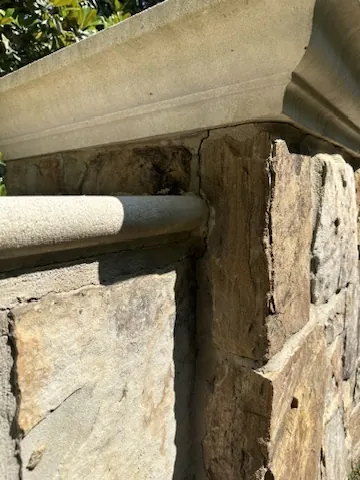
Close-up of a stone entrance column with an open joint beneath its cast stone cap
Deferred maintenanceAn open joint under the cap of a stone entrance column. Water that gets in here works the stones loose over time.

What's included

On-site component survey

We walk the property and inventory every common-area component the association maintains: roofs, paving, pools, decks, fencing, mechanical systems, amenities. Each one gets a condition rating, quantity, and remaining useful life.

Financial analysis

We compare your current reserve balance to what a fully funded reserve would hold today, and project cash flow year by year so you can see exactly when a shortfall would hit.

30-year funding plan

A recommended contribution schedule built around your budget, with options the board can weigh against dues increases or special assessments.

Board presentation and revision

Every study includes a presentation to your board: the findings, the funding options, and what each one costs per home. After that session, we make one round of revisions at no charge.

See a sample

Common questions

What's the difference between a full study and an update?

A full study (Level I) builds the component inventory from scratch with a site visit. An update with a site visit (Level II) re-inspects components and revises the numbers. An update without a site visit (Level III) refreshes the financial projections using the existing inventory. Most associations start with a full study and update it every one to three years.

How long does a reserve study take?

Most communities take a few weeks from the site visit to the draft report, depending on size and how quickly we receive financial records. We'll give you a timeline in the proposal.

What do you need from us?

Your current reserve balance, recent budgets, any prior reserve study, and records of major repairs or replacements in the last several years. Plat maps and governing documents help us confirm which components the association is responsible for.

Will you present the plan to our homeowners?

Yes, as an added service. The board presentation is included with every study. For an additional fee, we also present the study and funding plan to the community, answer the hard questions owners ask, and act as the independent third party explaining why dues need to go up, so the board isn't carrying that message alone.

Can our management company order the study for us?

Yes, and many do. We work directly with community managers on scheduling, records, and the board presentation, and the report is written so the manager can use it for budgeting.

Do you work outside the Atlanta area?

Our service territory is Atlanta, GA. Call us about communities outside it and we'll tell you whether we can help.

Related field guides

Inside a real study

Pages a board can actually read.

Two pages from a recent study, with the association's details removed. The summary comes first, in plain language, before any of the component schedules.

Executive summary
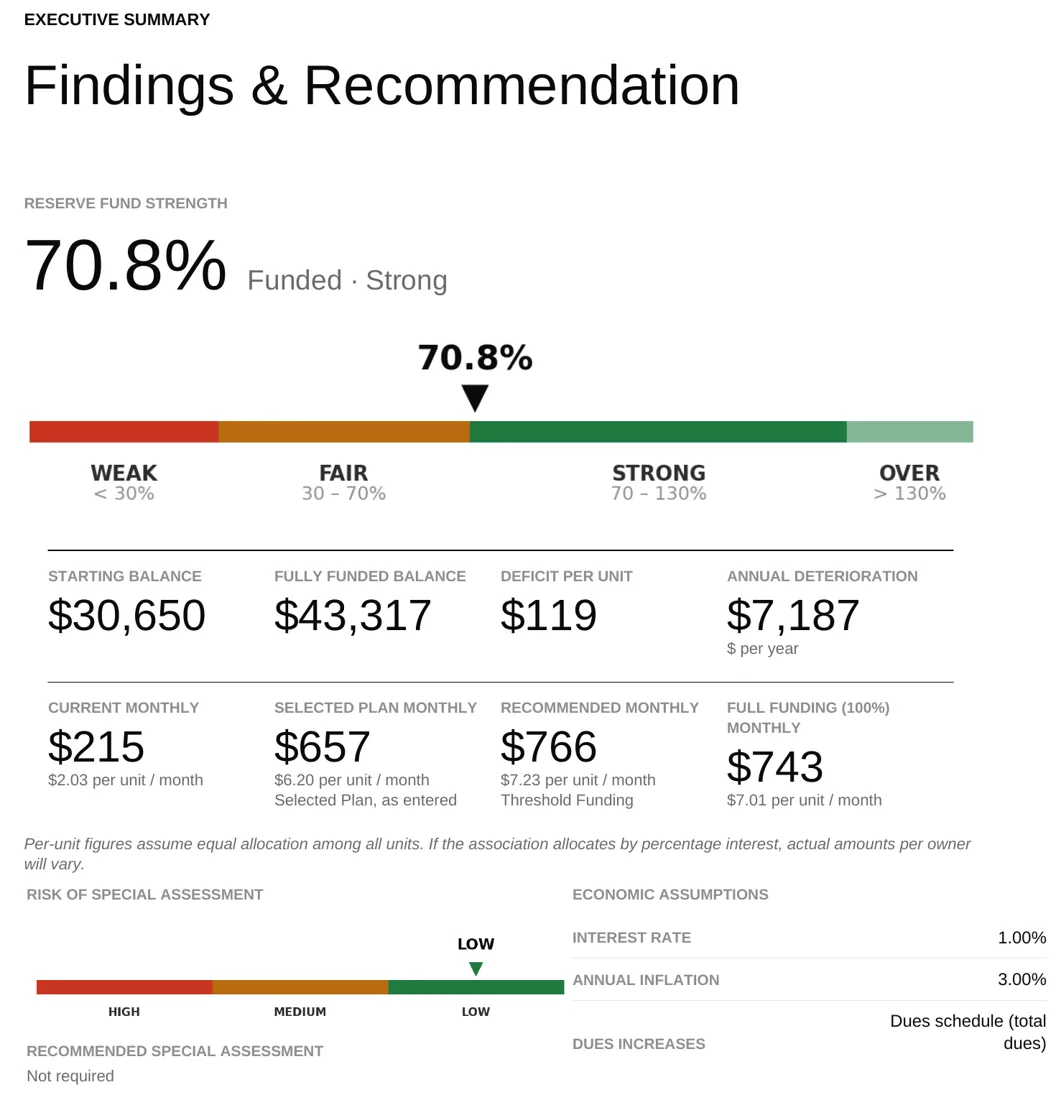
Executive summary page of a real reserve study showing 70.8% funded, current and recommended monthly contributions, and low risk of special assessment
Page one of the findings: where the fund stands, what each plan costs per home, and the risk of a special assessment.
30-year projection
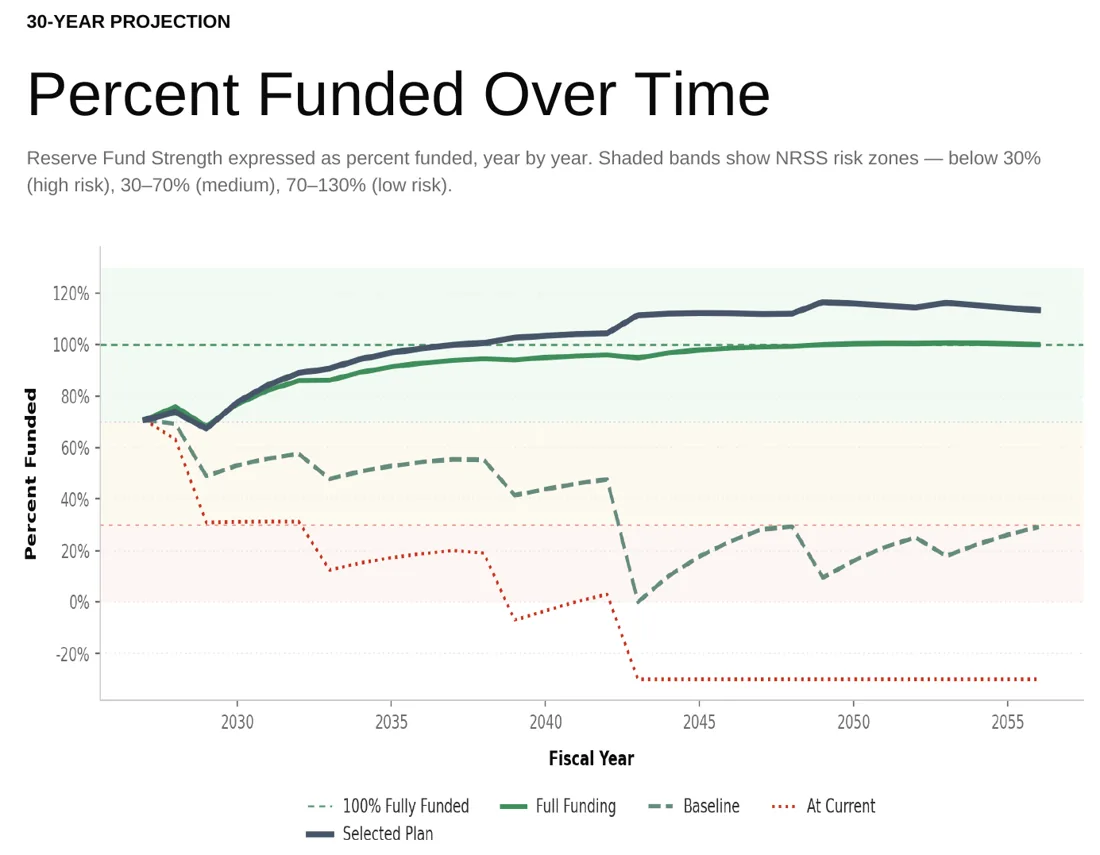
Chart of percent funded over 30 years for the selected plan, full funding, baseline, and current contribution
Every plan on one chart. The dotted line is the current contribution, falling below zero; the board's plan is the solid line on top.
Case study · Real study · metro Atlanta · about 100 homes

Healthy on paper, out of money by 2038.

At 71% funded, this community looked strong by the usual rule of thumb. The cash flow told a different story: reserves were getting $215 a month, and the projection ran the fund dry in 2038 as larger projects came due.

  1. Site visit. A full Level I study: every common-area component measured, rated, and given a remaining life.
  2. Options. Four funding plans side by side, from the minimum that avoids running out of cash to full funding.
  3. Board review. The trade-offs laid out in plain language: cost per home, lowest balance, and risk.
  4. The plan they adopted. Dues up 10% in year one and 6% in year two, then with inflation only.
$215 → $657Monthly reserve contribution
$42 → $49Total dues per home per month, after two years
67%Lowest percent funded over 30 years
NoneSpecial assessments needed

Real study; association name and identifying details withheld.

When dues have to go up

We'll be the one who says it.

Board members are volunteers, and the plan often means telling their neighbors that dues are going up. We can stand in front of the community instead: present the study and the plan to homeowners, answer the hard questions, and be the independent third party explaining why the increase is needed.

Ask about a community presentation
Included with every study
  • A presentation to your board: findings, funding options, and cost per home
  • One free revision after the board session
Added service · community presentation
  • We present the study and the funding plan to your homeowners
  • We answer the technical questions owners raise that the board may not have answers to
  • We explain the dues increase as the independent third party, so the board isn't defending the math alone
“Why does this have to happen now?”“What happens if we just wait a few years?”“Why not a special assessment instead?”“How do you know how long the roof will last?”
After the study

A reserve study is where it starts.

The study tells your board what's coming due and when. When a component comes up, we're the firm that already knows the property, so we can help with what comes next.

  1. Sidewalk & curb repairsDue 2028 · about $23,000
    Write the scope and compare bidsContract & bid consulting
  2. Pond dredgingDue in 15 years · about $14,000
    Manage the contractor through closeoutProject management
  3. Stone wall & pillarsTuckpointing due in 15 years
    Inspect yearly so open joints don't become rebuildsCondition assessments
  4. Plan drifts from realityProjects done early, late, or over budget
    Update the study so the numbers stay trueReserve study update
Contact

Get a proposal for community reserve studies.

We'll follow up with a straightforward proposal. If we're not the right fit, we'll tell you who is.

Service area
Atlanta, GA
Mailing address
Brooks, GA 30205
We reply within one business day.