Here's how most community projects actually run. The board approves a scope. The property manager gets bids, hires a contractor, and schedules the work. The contractor finishes, sends an invoice, and gets paid.
Nobody in that chain compared the finished work to the scope.
That isn't a criticism of property managers. A manager running a dozen communities is juggling budgets, violations, homeowner calls, and board meetings. Most were never trained as construction project managers, and nobody expects them to spend a day watching a roofer. So the contractor ends up as the only expert on site, and the contractor is effectively grading their own work.
This guide covers how to verify a job without being on site every day: what to check before work starts, during the job, and before you release the final payment.
Where scope drift happens
Scope drift is rarely dramatic. It's a series of small substitutions nobody signs off on:
- Tree work: the wrong trees come down, or the right ones come down but stumps aren't ground, debris is left behind, or a tree on a homeowner's lot is cut at the association's expense.
- Roofing: flashing reused instead of replaced, underlayment skipped on a section, damaged decking covered over instead of replaced.
- Painting: one coat where the scope said two, or no prep on surfaces that needed scraping and priming.
- Paving: a thinner overlay than specified, or base repairs left out.
- Carpentry and decks: new boards over rotted framing, fasteners that don't match the spec.
Most of these become invisible once the job is done. That's why verification has to happen while the work is still visible.
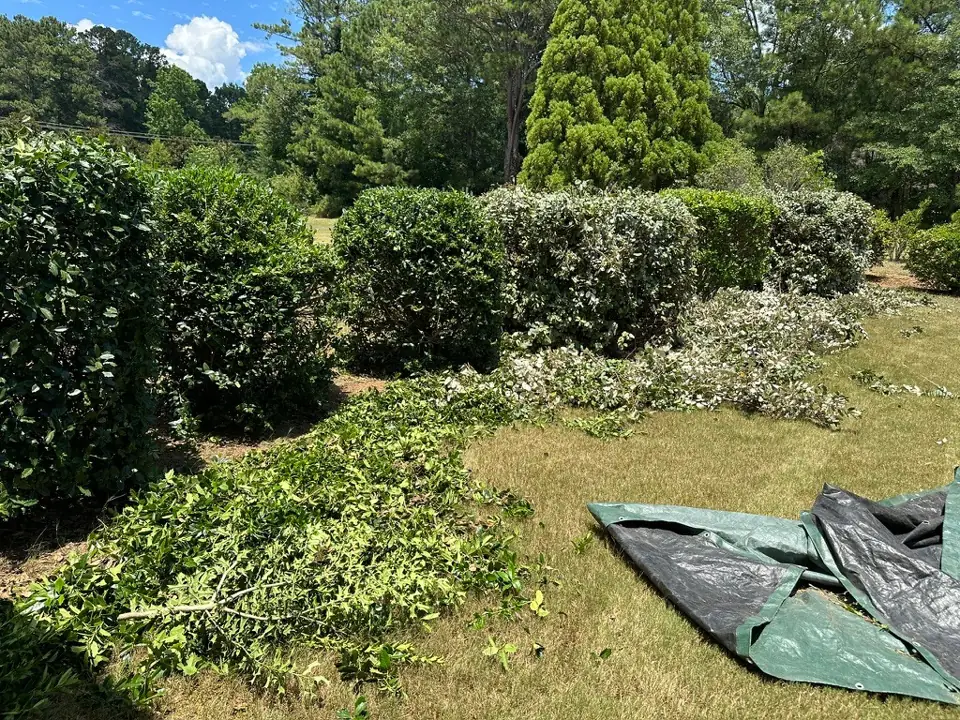
Mid-job on a shrub trimming contract. Hauling the clippings is in the scope, and it's the kind of line item that gets marked complete before it is.
Before work starts
Make the scope measurable. "Trim trees along the entrance" can't be verified. "Remove the six trees flagged in orange, grind stumps 6 inches below grade, haul all debris off site" can. If the scope can't be checked, rewrite it before the contractor starts.
Confirm who is responsible. Trees, fences, and drainage near lot lines are the most common source of disputes. Before the association pays to remove or repair anything near a property line, check the plat and, where it's unclear, have the line located. Paying for work on a homeowner's lot creates a precedent, and sometimes a liability, the board didn't intend.
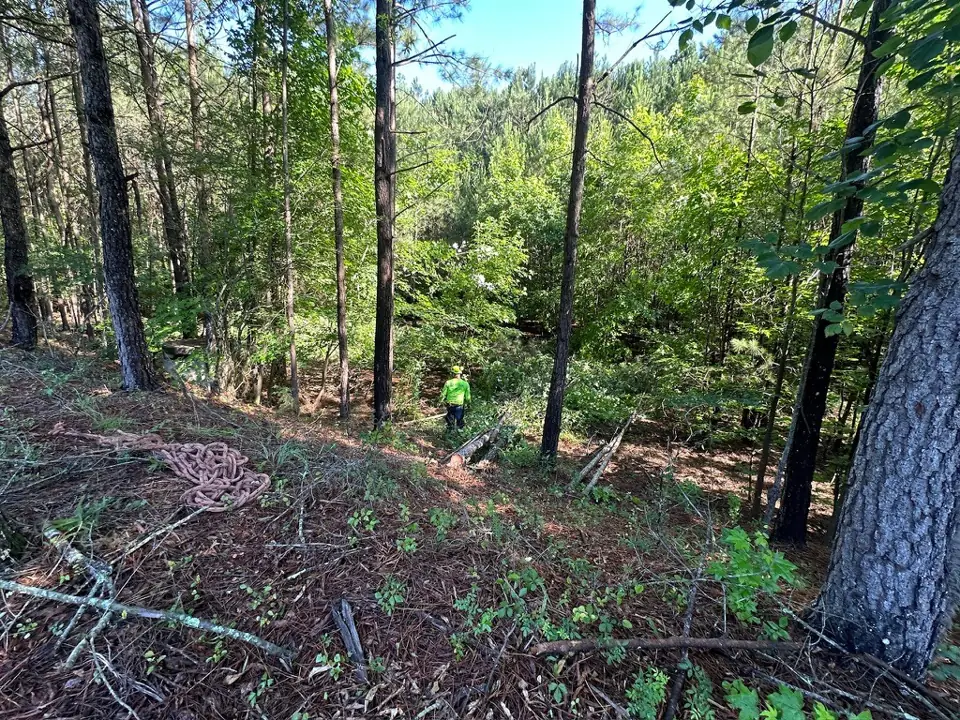
Our crew removing trees on a wooded common-area slope. Before the first cut: which trees, whose lot, and where the debris goes.
Mark it in the field. Flag trees, paint-mark pavement repairs, tag the units in the scope. The contractor and the inspector should be looking at the same marks.
Take "before" photos. Date-stamped photos of every item in the scope, plus the areas around it: landscaping, curbs, siding, cars' routes. You'll need them if something gets damaged.
Get the paperwork first. Certificate of insurance naming the association, the contractor's license where Georgia requires one, and a written schedule of values so you know what each payment covers.
During the job
Inspect before work gets covered up. The most important checks happen at hidden-work milestones: roof decking before underlayment goes on, framing before deck boards, base repairs before the overlay. Ask the contractor to call before each one, and make it a condition of payment.
Keep a simple log. Date, crew on site, what was done, photos. Ten minutes a visit is enough.
Put every change in writing. If the contractor finds rot behind the siding or a tree is bigger than expected, the change order should say what's being added, why, and what it costs, and someone with authority should sign it before the work happens.
Before you release final payment
Walk the job with the scope in hand. Go line by line. Each item is either complete, incomplete, or not to spec. Write it down and take photos.
Issue a punch list. One written list, with photos, sent to the contractor with a date for completion. Then walk it again.
Collect the closeout documents. Warranties (labor and manufacturer), product information, and lien waivers. Georgia uses statutory lien waiver forms; collect the appropriate waiver with each payment so the association isn't exposed to claims from unpaid subcontractors or suppliers.
Hold back the final payment until the punch list is done. This is your only real leverage. Once the contractor is paid in full, punch list items move to the bottom of their schedule.
A one-page checklist
| Stage | Check | Done |
|---|---|---|
| Before | Scope is measurable (quantities, locations, specs) | ☐ |
| Before | Responsibility confirmed for anything near a lot line | ☐ |
| Before | Items flagged or marked in the field | ☐ |
| Before | Dated "before" photos of every scope item | ☐ |
| Before | Insurance certificate, license, schedule of values on file | ☐ |
| During | Inspected at each hidden-work milestone | ☐ |
| During | Every change order written and signed before work | ☐ |
| After | Line-by-line walk against the scope | ☐ |
| After | Punch list issued and re-walked | ☐ |
| After | Warranties and lien waivers collected | ☐ |
| After | Final payment released only after punch list is complete | ☐ |
When to bring in an owner's representative
Some projects justify an independent set of eyes:
- Anything structural, or anything with a lot of hidden work (roofing, decks, siding, paving)
- Projects large enough that a mistake would mean a special assessment
- Work near property lines or with a history of homeowner disputes
- A board that has been burned before and wants documentation
An owner's representative works for the association, not the contractor. They write or tighten the scope, inspect at the milestones, keep the photo record, review pay applications, and run the punch list. The property manager stays the board's point of contact and gets a report instead of a site visit.
This guide is general information, not legal advice. Have your association's attorney review contracts and lien waiver requirements for your project.